The Untitled History Podcast

Deep dives into history’s fascinating rabbit holes.

Untitled History Podcast is the podcast that takes you beyond the textbooks to explore the untold stories of the ancient and modern worlds.

Join Gareth Edwards and a lineup of world-leading experts that lifts the lid on famous episodes and obscure global events alike.


Do you like our podcast?

Then please leave us a review, it helps us a lot!


Host: Gareth Edwards

More about Gareth Edwards: ⁠https://battleguide.co.uk/untitled-history#host⁠


To comment and ask questions, please join our community:⁠ https://untitled-history.com/supporters

Use our code: Rabbit and get one month free as a Captain, or join as a free member.


Support via Paypal:⁠ http://battleguide.co.uk/untitled-paypal⁠⁠

Merchandise and Shop: ⁠https://untitled-history.com/collections/all


Our WW1 Podcast:⁠⁠ https://listen.not-so-quiet.com/

Our WW2 Podcast:⁠ ⁠⁠https://listen.both-sides-of-the-wire.com⁠

Battle Guide YouTube Channel:⁠ https://www.youtube.com/@BattleGuideVT⁠


If you want to keep your finger on the pulse of what the team at Battle Guide have been getting up to, why not sign up to our monthly newsletter:⁠ ⁠https://battleguide.co.uk/newsletter⁠


Gareth socials

BlueSky: https://bsky.app/profile/garius.bsky.social

Mastodon: https://mastodon.me.uk/@garius


Battle Guide Twitter: https://x.com/BattleguideVTGeneral Enquiries: ⁠untitled@battleguide.co.uk⁠⁠⁠


Credits:

- Host: Gareth Edwards

- Production: Linus Klaßen

History
1
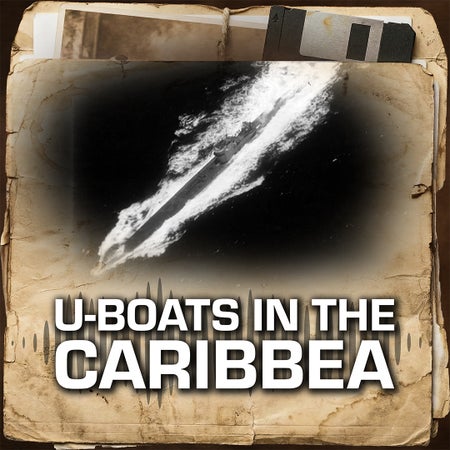
The Forgotten U-Boat Campaign of WW2
In 1942, the Caribbean became one of the most contested seas in the world, as Axis submarines wreaked havoc on allied shipping. Turning the tide in the Caribbean would prove vital to the war.
47 min
2
Episode 40: The Rise and Fall of Mr. Blobby
For five years in the nineties, one figure dominated British cultural life. His economic impact would change the BBC forever. On this episode, we’ll be looking at the rise, fall and historical impact of Mr Blobby.
52 min
3
Episode 39: How Do Humans Invent Monsters?
People define what they mean by human by defining where human ends. On this episode, we’re going to explore the history of humans and monsters.
45 min
4
Episode 38: Did One Telegram Bring America into...
In this crossover episode with the Not So Quiet on the Western Front podcast, we explore the story behind the Zimmermann Telegram, the spycraft that brought it to light, and whether it really was the moment that brought America into the First World War.
48 min
5
Episode 37: Milton Keynes: The Future that Coul...
Today, Milton Keynes is either famous, or infamous, depending on your perspective on its design. But what’s not in doubt was that the process that led to its creation was unique.
45 min
6
Episode 36: How Rome used cheese to conquer Bri...
The Roman Army was powered by cheese. It fuelled its soldiers through war and occupation and, as Rome’s armies swept through western Europe, altered how an entire continent produced and consumed cheese.
47 min
7
Episode 35: The Anti-Fascist Italian Art Forger...
Today, we are going to talk about one of the most extraordinary acts of art fraud perpetrated during this era. One that would trigger a vicious war of words between experts across Europe and America. It would also make a colourful, Italian anti-fascist sculptor called Alceo Dossena one of the most infamous forgers in history.
52 min
8
Episode 34: The last stand of HMS Glowworm and ...
On the 8th of 1940, a lone British destroyer encountered part of the German invasion force bound for Norway. The heroic last stand of HMS Glowworm against overwhelming odds earned her captain the first Victoria Cross of the war. Incredibly, this award was granted based on the recommendation of the German Admiral he had fought.
50 min
9
Episode 33: Charles De Gaulle and the birth of ...
Post war, de Gaulle was both loved and loathed. Churchill planned the route of his own funeral to include Waterloo station, precisely because he knew it would annoy de Gaulle who would be forced to attend. But in this episode, we’re going to look at France’s near-coup and collapse, and the role of de Gaulle in its salvation.
47 min
10
Episode 32: Forgotten Crusader Queens of Cyprus
For three decades in the late 1400s, the throne of Cyprus would be fought over by two women, each with a claim on its title. Although mostly forgotten today, this political battle would draw in all of the great powers of the region, from Egypt to the papacy.
43 min
11
Episode 31: Origins of Celebrity with Greg Jenner
Celebrities feel like a modern idea. Something that owes its origins to the rise of Hollywood, television and reality TV. But its cultural origins run far deeper. People who could be - and were - treated as celebrities can be seen right back to the world of 17th century theatre and beyond.
53 min
12
Episode 30 Extra Bit: Rescuing Pilots From the ...
In this Extra Bit episode, Gareth and Matt Bone shine a light on the pilots of the Typhoon and Spitfire raids on D-Day's radar stations: the air-sea rescue crews.
30 min
13
Episode 30: How the Allies punched the hole in ...
By 1944, the German’s had a highly-advanced radar system covering the entirety of the Channel coast, which would provide considerable warning of any unfolding allied invasion. By D-Day only 20% of the German radar stations opposing the invasion were functioning. In this episode, we talk about the pilots and planes that made that happen.
49 min
14
Episode 29: 1983: The year of crises that almos...
In September 1983, the Soviet missile launch detection system falsely reported an inbound US missile strike. The actions of Stanislav Petrov that day, who refused to report the launch as true, have often been described as having saved the world. This is the story of 1983. The year the world almost ended.
49 min
15
Episode 28: Agatha Christie goes to war
Agatha Christie is the world’s best selling author and rightly regarded as the queen of crime. But less well known is her medical service in both world wars, and its influence on her writing. Without WW1, there would be no Poirot.
54 min
16
Episode 27: The history and cultural impact of ...
The best selling comic series in the world is One Piece. But the second best selling, with almost 400 million copies sold, is neither British nor American. It is, in fact, the story of a small French village holding out against the Roman Empire. In this episode we’re going to look at the history, and cultural impact, of Asterix the Gaul.
63 min
17
Episode 26: The myth and reality of medieval Cr...
In the aftermath of the First Crusade, four Christian kingdoms were established in the near east. In this episode we explore the history of the Crusader States, and the many myths that surround them.
52 min
18
Episode 25: 18th Century letter writing and the...
In 1740, Samuel Richardson published Pamela, a novel purporting to be the letters of a young woman. In 1748, he followed this up with Clarissa, written on the same principle. Richardson’s subjects were fake. But the activity he showed them engaging in was very real. The creation of reliable and regular postal services after the English Civil War led to an explosion in letter writing, especially for women. Through letters they could build and maintain relationships, share opinions on society or politics and reflect on life. Just as we do through messaging platforms or social media today. Indeed the intimacy and information contained within those letters could even provoke questions on how those letters  should be handled after death. Collections of those letters which do survive provide historians with a remarkable insight into the lives of people - and particularly women - within this period. Guest Dr Natasha Simonova is a writer and academic specialising in English literature in the long 18th century. She is currently working on a book called The Grey Ladies: The Secret Lives of 18th-Century Women. Cats present Cecilia, Penny (Guest kitty) Useful links Natasha’s website: https://natashasimonova.com Publishing 18th Century Women’s Manuscript letters (conference talk): https://www.youtube.com/watch?v=_BM0rCa4JUo&t=15895s Pamela by Samuel Richardson: https://www.gutenberg.org/ebooks/6124
48 min
19
Episode 24: How Games Workshop changed the worl...
In 1975, three young men sat in a grotty flat in West London decided to launch a games company. Today, we’re going to talk about the history of Games Workshop and the universe it launched: Warhammer Today, Games Workshop, with its line of Warhammer games, books and more stands as one of the most successful British companies in history.
58 min
20
Episode 23: Robin Hood: The Truth Behind the Myth
In this episode, we’re going to explore the medieval origins of Robin Hood, and how he has always reflected the society and time in which his story is being told.
47 min
21
Episode 22: How Piracy Actually Worked
Ask most people to describe a pirate and their ship, and they’ll likely conjure up an image of an eye-patch-wearing man commanding a huge ship. An image that, in most cases, could not be farther from the truth. On this episode, we’re going to look at how some of those myths came about, and the reality hidden behind them.
56 min
22
Episode 21: America’s Influence on Tudor England
The 16th Century saw a two way exchange of objects, ideas and people between Europe and the Americas to a far greater extent than is often understood. Today we’re going to explore the influence of the Americas on Tudor England and beyond.
49 min
23
Episode 20: When Radium Was Put in Everything
The discovery of Radium in 1898 opened up new frontiers of science and medicine. But the sheer difference between the behaviour of radium and every element that had been discovered before, led to wild claims about its properties. These claims, and the mystery surrounding the new element, led to a period sometimes known as the ‘Radium Craze’.
54 min
24
Episode 19: Demonology and the Dead Sea Scrolls
The period of the Second Temple was a time of cultural change for Jewish communities, including in how they regarded concepts such as magic and demons. But evidence for what that meant on the ground was limited until the discovery of the Dead Sea Scrolls in 1946, and the wealth of scholarship that followed.
52 min
25
Episode 18: Everyday Clothing in Roman Judea
Jesus in flowing robes. Mary, his mother, in a veil. Mary Magdalene in red with loose flowing hair. Even the disciples in short tunics bare-headed. All these, and more, are part of the standard iconography of Christianity. Yet both here, and with Roman or Greco-Roman people in this period of general, many of our ideas on daily dress and styling are wrong.
54 min