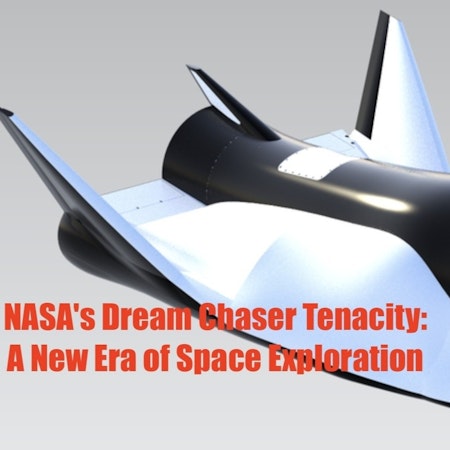
NASA's Dream Chaser Tenacity: A New E...
NASA's Dream Chaser Tenacity: A New Era of Space Exploration NASA's latest addition to its fleet, the Dream Chaser Tenacity, recently arrived at Kennedy Space Center, marking a significant milestone in the future of space transportation. Developed by Sierra Nevada Corporation (SNC), this spaceplane is designed to revolutionize how we access and utilize low Earth orbit. The arrival of the Dream Chaser Tenacity represents a culmination of years of hard work, innovation, and collaboration between NASA, SNC, and various partners across the aerospace industry. The Dream Chaser Tenacity is not just another spacecraft; it embodies a new era of space exploration, one that emphasizes versatility, reusability, and sustainability. With its unique design and advanced capabilities, the Dream Chaser is poised to transform the way we conduct space missions, support scientific research, and expand our presence in the cosmos. As we stand at the cusp of this exciting new chapter in space exploration, it is worth examining the Dream Chaser Tenacity in detail, from its historical context and development process to its technical specifications and mission objectives. By understanding the significance of this remarkable spaceplane, we can better appreciate its potential to shape the future of space travel and unlock new opportunities for discovery and innovation. The concept of a spaceplane has long fascinated scientists and engineers, representing a bold vision of a reusable spacecraft that combines the best aspects of traditional rockets and airplanes. The idea of a vehicle that can launch vertically, operate in space, and then return to Earth by landing on a conventional runway has been a driving force behind decades of aerospace research and development. The origins of the spaceplane concept can be traced back to the early days of the Space Shuttle program, which first launched in 1981. The Space Shuttle was a remarkable achievement in its own right, demonstrating the feasibility of a reusable spacecraft that could transport crew and cargo to and from low Earth orbit. However, the Shuttle program also highlighted the challenges and limitations of this approach, including high operational costs, complex maintenance requirements, and safety concerns. In the years following the retirement of the Space Shuttle fleet in 2011, various space agencies and private companies have sought to build upon the lessons learned from that program and develop new spaceplane designs that address its shortcomings. One notable example is the X-37B, an unmanned spaceplane developed by Boeing and operated by the United States Air Force. The X-37B has completed several successful missions, demonstrating the potential of reusable spacecraft for long-duration operations in space.
The Dream Chaser Tenacity represents the latest iteration of the spaceplane concept, drawing upon the rich history of its predecessors while incorporating cutting-edge technologies and innovative design features. B
This content was created in partnership and with the help of Artificial Intelligence AI.
1
NASA's Dream Chaser Tenacity- A New Era of Spac...
34 min