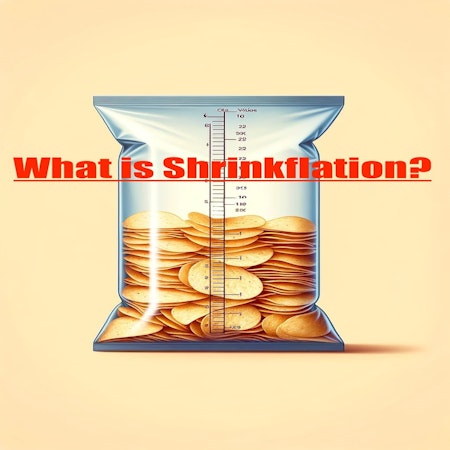
What is Shrinkflation?
Shrinkflation refers to the practice of companies subtly reducing the size or quantity of a product while still charging the same price. This allows companies to avoid significantly raising prices, which could shock or alert consumers, while still increasing profit margins.
The Origin of Shrinkflation The term "shrinkflation" is a portmanteau of the words "shrinking" and "inflation." It was first used in 2009 when the global financial crisis and rising production costs led companies to shrink package sizes without lowering prices accordingly. This allowed companies to offset rising input prices without consumers realizing they were getting less for their money.
However, the practice of sneakily downsizing products predates the term shrinkflation. Economists note that packaging sizes have been very gradually getting smaller for decades - ever since the 1970s. This may have begun due to rising inflation and production costs. However, shrinkflation appears to have accelerated since 2009 for a variety of economic reasons.
Why Companies Are Using Shrinkflation Shrinkflation has become an increasingly common tactic for consumer goods companies today. There are several key economic factors driving the growth of shrinkflation:
- Rising Inflation: With transportation, raw materials, labor and other input costs rising, shrinkflation is an easy way for companies to maintain profit margins. Shrinking product sizes allows them to avoid significantly hiking prices which could scare off consumers. Subtly reducing quantities means companies can offset rising costs without consumers realizing it.
- Increased Competition: In competitive, low-margin categories like food, shrinkflation can give companies an advantage. Consumers tend to be very price sensitive and notice even small price per unit increases. By subtly reducing product sizes, companies can avoid raising red flags for consumers used to specific price points while still improving profitability. This then allows more flexibility with promotional pricing as well.
- Consumer Habit: Consumers get used to package sizes and price points. By making small, gradual reductions to sizes, companies can benefit from this consumer habit and inertia. The differences from one month to the next are small enough that many consumers simply don't notice slight downsizes over time. This "boiling frog" effect means companies can slowly reap more margin without consumers realizing.
Examples of Shrinkflation Shrinkflation is now found across a huge variety of consumer product categories:
Food & Beverages: This category has seen some of the most egregious examples of shrinkflation over the past decade. Candy bars, sodas, cereals, cookies and more have subtly shrunk in size while still being sold for the same price. For example, family-size chocolate bars like Snickers which used to weigh 2.07 ounces now weigh 1.4 ounces. Packages of 16 ounces of orange juice are now sold as 12 ounces. A tub of Nestle cookie dough wen
This content was created in partnership and with the help of Artificial Intelligence AI.
1
What is Shrinkflation?
11 min