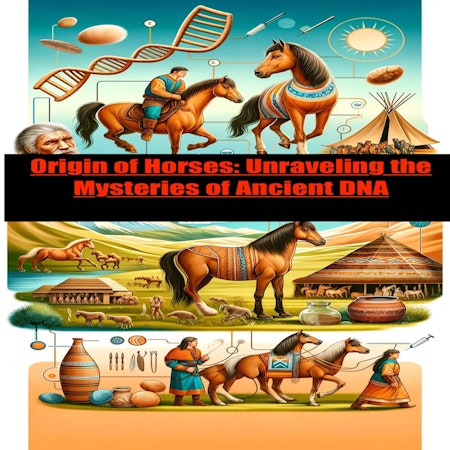
Origin of Horses: Unraveling the Myst...
The Origin of Horses: Unraveling the Mysteries of Ancient DNA In the vast expanse of human history, few creatures have captured our imagination and played such a pivotal role in shaping our civilization as the horse. This magnificent animal, with its strength, grace, and unwavering spirit, has been a constant companion on our journey through the ages. From the windswept steppes of Eurasia to the bustling cities of the modern world, the story of the horse is a tale of resilience, adaptation, and enduring partnership with humankind. Recent advancements in the field of ancient DNA research have opened up new vistas of understanding, allowing us to peer into the distant past and unravel the mysteries surrounding the origin and domestication of horses. Through the lens of cutting-edge scientific techniques, we can now trace the genetic lineage of these remarkable creatures, uncovering a timeline that stretches back thousands of years and spans vast geographical regions. Our journey begins on the expansive grasslands of Eurasia, a region that encompasses modern-day Ukraine, southwest Russia, and west Kazakhstan. It was here, amidst the swaying grasses and endless horizons, that the first horses were domesticated by ancient human societies. This momentous event, which occurred around 4,200 years ago, marked a turning point in the grand narrative of human history. The domestication of horses was a transformative process that had far-reaching implications for the societies that embraced it. By harnessing the power and speed of these majestic animals, humans were able to revolutionize transportation, agriculture, and warfare. No longer were they bound by the limitations of their own physical abilities; with horses by their side, they could travel great distances, plow fields with greater efficiency, and engage in battles with newfound strength and mobility. But the story of horse domestication is not a simple one. It is a complex tapestry woven from threads of genetic data, archaeological evidence, and cultural context. To fully appreciate the significance of this event, we must delve deeper into the scientific breakthroughs that have shed light on the origins of the horse-human relationship. In recent years, groundbreaking studies published in prestigious scientific journals have utilized the power of ancient DNA to unravel the genetic lineage of modern horses. By carefully extracting and analyzing DNA from ancient horse bones, scientists have been able to pinpoint the geographical and temporal origins of domesticated horses with remarkable precision. One of the most significant findings to emerge from this research is the identification of the Botai culture as the earliest known horse domesticators. The Botai people, who lived in what is now northern Kazakhstan around 5,500 years ago, were among the first to harness the power of horses for riding and milking. Archaeological excavations at Botai sites have unearthed horse bones bearing the telltale signs
This content was created in partnership and with the help of Artificial Intelligence AI.
1
Origin of Horses- Unraveling the Mysteries of A...
7 min